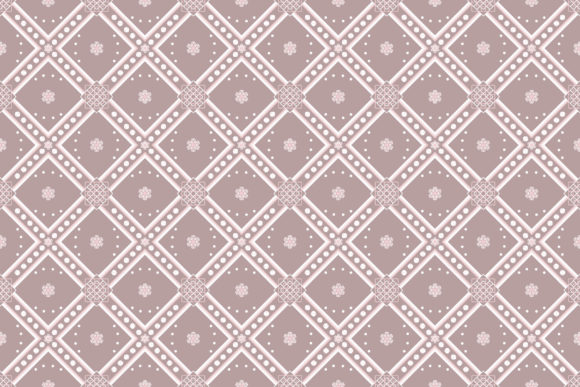
Light Brown Ethnic Pattern: A Seamless Design Asset for Real-World Fabric and Digital Projects
A Light Brown Ethnic Pattern isn’t just a visual motif—it’s a functional design element built for integration. Its warm, earthy tone and geometric rhythm make it especially effective in contexts where cultural resonance, natural warmth, and structural clarity matter: textile design, branding assets, packaging backgrounds, web UI overlays, and print collateral. Unlike high-contrast or saturated patterns, this version balances visibility with subtlety—ideal for layering without overwhelming content or competing with typography.
The pattern is delivered as a seamless square (1:1 ratio) with three editable file formats: AI (vector, fully scalable and modifiable in Adobe Illustrator), EPS (cross-platform vector compatibility, widely accepted by printers and production teams), and JPG (high-resolution raster for immediate use in presentations, mockups, or CMS uploads). This multi-format delivery reflects how real workflows operate—not in isolation, but across software ecosystems, team handoffs, and output requirements.
How It Fits Into Your Creative or Production Workflow
Most users don’t start with a pattern—they start with a need: a fabric swatch for a small-batch apparel line, a background texture for an e-commerce product page, or a consistent visual anchor for a brand’s seasonal campaign. The Light Brown Ethnic Pattern enters that process at multiple points—not as a final deliverable, but as a reusable component.
Before a project begins, designers and product developers often curate asset libraries. Adding this pattern to a shared cloud folder or digital asset management (DAM) system means it’s searchable, version-controlled, and ready when a mood board shifts from “neutral” to “warmly grounded.” For freelancers juggling five clients, having one well-documented, color-consistent ethnic pattern reduces time spent re-creating or adjusting hues across projects.
During execution, the AI and EPS files support precision. Need to recolor the pattern to match a Pantone? Adjust spacing between motifs for a larger-scale upholstery print? Isolate a single repeat unit to animate it in After Effects? Vector files allow those changes without quality loss. The JPG serves parallel needs: embedding into Figma prototypes, pasting into Canva templates, or uploading directly to Shopify theme editors—no conversion step required.
Integration With Tools, Teams, and Output Channels
Compatibility isn’t theoretical—it’s measured in minutes saved during export, fewer revision rounds with printers, and smoother handoffs between designers and developers. The Light Brown Ethnic Pattern works because it anticipates real constraints:
- Print production: EPS ensures crisp rendering at any size—critical for large-format fabric printing or signage where pixelation breaks continuity.
- Digital development: Designers can export SVG versions from the AI file for responsive CSS backgrounds; developers can reference the JPG’s hex values if replicating the light brown (#c9a78b, for example) in code.
- Cross-functional alignment: When marketing, product, and design teams share the same source file, there’s less ambiguity about “that warm geometric look we liked”—just a named, versioned asset.
It also interfaces cleanly with common platforms. In Adobe Creative Cloud, the AI file drops into Libraries for one-click access across Photoshop, Illustrator, and XD. In Canva, the JPG imports instantly and tiles automatically using the “repeat image” background setting. For educators building slide decks or bloggers designing Pinterest pins, the square ratio simplifies cropping—no guesswork needed to fill a 1080×1080 social thumbnail.
Practical Implementation Tips You’ll Use Immediately
Here’s what works—not what sounds impressive on a spec sheet:
- Test scale before committing: Ethnic patterns rely on repetition to read clearly. At very small sizes (e.g., 24×24 px icons), the geometry blurs. Preview your intended use case: zoom out in Illustrator to 25% or view the JPG at actual pixel dimensions in Photoshop before approving for app UI.
- Use the AI file to build variants—not just recolor: Duplicate the motif group, rotate 45°, and offset slightly to create a secondary texture. Combine with the original for depth in packaging or editorial layouts.
- Organize files with intention: Name them consistently—light-brown-ethnic-pattern_v2_ai, light-brown-ethnic-pattern_v2_eps, light-brown-ethnic-pattern_v2_jpg_300dpi. Include version numbers. Future-you (or your contractor) will skip the “which one is final?” email.
- Check contrast for accessibility: When used behind text, verify the light brown meets WCAG contrast ratios. In most cases, white or dark charcoal text passes—but always test with a tool like WebAIM’s Contrast Checker, especially on mobile screens.
Long-Term Usability and Quality Control
A pattern isn’t just “used once.” It becomes part of your visual language. That’s why consistency matters: same base hue, same repeat logic, same file structure across projects. The Light Brown Ethnic Pattern supports this by delivering predictable geometry—no irregular spacing, no unintended gaps at tile edges. That seamlessness means you can scale it to a 10-foot banner or shrink it to a 2-inch label without visual stutter.
For small business owners producing custom tote bags or stationery, that reliability translates to fewer physical proofs and lower setup costs. For educators creating printable worksheets or flashcards, it means clean duplication across dozens of pages without banding or misalignment. For marketers running A/B tests on landing page backgrounds, it means isolating variables—changing only color or layout, not underlying pattern integrity.
Quality control starts with the source. Because the AI and EPS files are vector-based, they’re resolution-independent and editable at the node level. If a client requests a slight adjustment—tighter spacing, softened corners, or a single motif extraction—you can deliver it in under 10 minutes without outsourcing or licensing complications. No third-party dependencies. No attribution strings. Just clean, owned geometry.
Where It Adds Value Beyond Aesthetics
This pattern does more than “look nice.” It solves specific workflow friction points:
- Reduces decision fatigue: Instead of debating “should this be beige or taupe? Should the geometry be organic or angular?”, you have a tested, balanced option ready to deploy.
- Supports brand scalability: As your business moves from Etsy listings to wholesale catalogs, the same pattern adapts—scaled up for fabric rolls, simplified for embroidery digitizing, or desaturated for eco-friendly unbleached cotton.
- Enables faster iteration: When a client says “make it feel more grounded but keep the energy,” swapping in the Light Brown Ethnic Pattern (instead of starting from scratch) preserves momentum while shifting tone.
- Improves cross-medium coherence: Use the JPG for social thumbnails, the EPS for printed hang tags, and the AI to generate a matching border for email headers—all pulling from the same visual DNA.
Ultimately, the value isn’t in the pattern itself, but in how little it asks of your time, tools, or attention. It’s designed to integrate—not interrupt. To support your process—not define it. And to remain useful whether you’re launching a capsule collection tomorrow or building a decade-long brand identity.