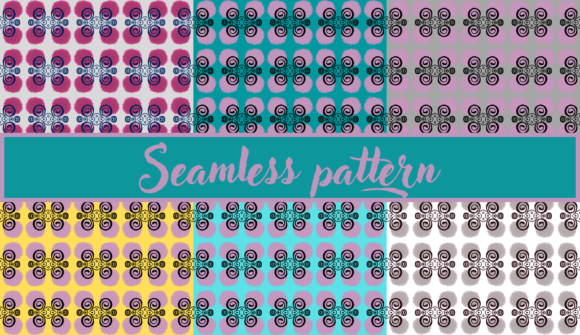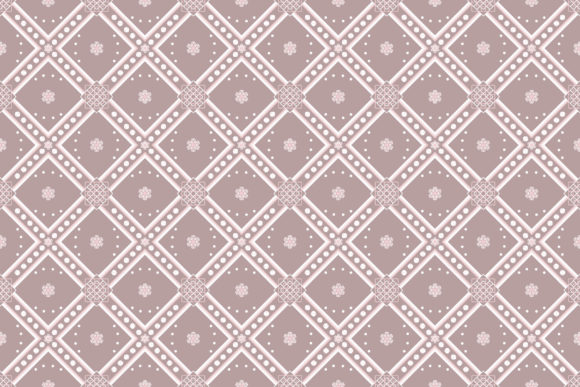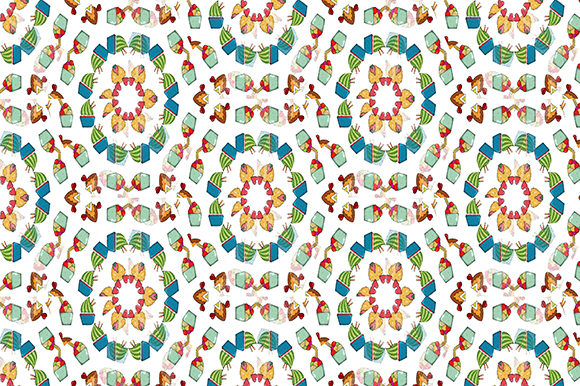
Rose in Seamless Pattern and Clipart: High-Resolution Design Assets for Professional Projects
Whether you're crafting elegant stationery, designing textile prints, or building a luxury brand identity, Rose in Seamless Pattern and Clipart offers versatile, high-fidelity visual assets that bridge creativity and technical precision. These aren’t generic floral motifs — they’re thoughtfully engineered design elements built for real-world application, from print production to digital interfaces.
What Makes This Rose Pattern Truly Seamless?
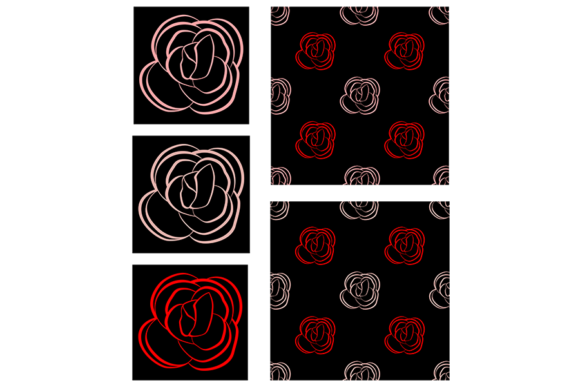
A seamless pattern doesn’t just repeat — it vanishes at the edges. With Rose in Seamless Pattern and Clipart, every petal, stem, and leaf aligns flawlessly across tile boundaries. There’s no visible seam, no awkward cut-off, no pixelated jump when tiled horizontally or vertically. That’s essential whether you’re wrapping a gift box, filling a website background, or printing yardage for upholstery.
This isn’t achieved by simple copy-paste repetition. The design undergoes meticulous manual refinement: adjusting curve continuity, balancing negative space, and ensuring consistent stroke weight across all elements. The result? A natural rhythm — like vines growing across a wall — rather than a mechanical grid.
Why 6000 × 6000 Pixels Matters (More Than You Think)
The 6000 × 6000 pixel dimension isn’t arbitrary. It’s a strategic sweet spot for flexibility:
- Large-format printing: At 300 PPI, this resolution supports crisp output up to 20 inches × 20 inches — ideal for framed art prints, presentation backdrops, or signage.
- Multi-scale use: Need a thumbnail for a web gallery? Scale down without interpolation artifacts. Want to isolate one rose as a standalone icon? Crop freely — you’ll still retain over 2000 pixels of detail.
- Future-proofing: As display densities increase (think 5K monitors or retina tablets), having headroom in resolution ensures your designs stay sharp — no upscaling guesswork required.
Unlike lower-resolution clipart that blurs when enlarged, Rose in Seamless Pattern and Clipart holds its integrity across contexts — from Instagram story overlays to embroidered fabric transfers.
Print-Ready by Design: 20″ × 20″ at 300 PPI
Document size and resolution go hand-in-hand. A 20-inch width × 20-inch height canvas at 300 pixels per inch is the industry standard for professional offset and fine-art printing. This means:
- No resizing surprises in prepress — your file drops into layout software (InDesign, Illustrator, Affinity Publisher) at 100% scale with zero resampling.
- Consistent color fidelity: High-res raster files preserve subtle gradients in rose petals and soft shadow transitions that vector simplifications often lose.
- Reliable bleed and trim handling: With generous canvas margins, designers can extend patterns confidently into bleed zones without fear of cutoff or tiling glitches.
This level of print readiness saves hours — no more frantic last-minute conversions or vendor rejections due to “low-res assets.”
JPG vs. PNG: Choosing the Right File Format
You’ll receive both JPG and PNG versions — and the difference matters more than file extension alone suggests.
Use JPG When…
You need smaller file sizes for fast-loading websites, email campaigns, or CMS uploads. JPG handles complex color blends beautifully — especially important for realistic rose tones, soft shadows, and ambient light effects. Just remember: JPG uses lossy compression, so avoid repeated saves if you plan to edit further.
Choose PNG When…
You require transparency — think social media banners with overlapping text, app UI elements, or layered mockups where the rose pattern sits atop a gradient or photo background. PNG preserves alpha channels cleanly, letting you drop the pattern anywhere without white boxes or jagged edges.
Pro tip: For packaging mockups or apparel templates, start with PNG. For blog headers or email footers, JPG delivers faster load times without perceptible quality loss.
Real-World Applications Across Industries
Rose in Seamless Pattern and Clipart thrives beyond decorative flourishes. Here’s how professionals actually use it:
- Textile & Surface Design: Print studios apply the pattern directly to fabric swatches for scarves, napkins, or wallpaper samples. Its 20″ square size matches standard digital textile printer beds.
- Branding & Packaging: A cosmetics line uses the pattern as a subtle liner inside gift boxes; a boutique bakery overlays it on cupcake box wraps — always scaled to feel luxurious, never overwhelming.
- Digital Product Design: UI/UX teams extract individual roses as SVG-ready icons (via quick trace-and-clean workflows) or use the full pattern as a gentle background for dashboard cards — adding warmth without sacrificing readability.
- Stationery & Invitations: Wedding designers tile the pattern across save-the-date postcards, then isolate single blooms to frame names or dates — all from one source file.
What ties these uses together? Control. You decide how dominant or delicate the rose feels — because the asset gives you room to breathe, not constraints to work around.
Workflow Integration: How It Fits Into Your Tools
These files slot naturally into common creative pipelines:
- In Adobe Photoshop: Drag in the PNG for non-destructive layering; use “Define Pattern” to create custom brushes or fill layers.
- In Adobe Illustrator: Place the JPG or PNG, then use Image Trace (with “High Fidelity Photo” preset) to generate editable vector derivatives — ideal for logos or monograms.
- In Canva or Figma: Upload either format directly. Use the PNG for transparent overlays; apply the JPG as a background with “Cover” or “Tile” positioning options.
- In Procreate or Affinity Designer: Import at full resolution — zoom in to refine details or paint over specific petals for custom illustrations.
No plugins. No conversion steps. Just open, place, adapt.
What to Consider Before Using These Assets
While Rose in Seamless Pattern and Clipart is exceptionally flexible, thoughtful usage ensures best results:
- Color mode matters: Files are delivered in RGB — perfect for screens. For CMYK print jobs, convert in Photoshop *after* placing, using your printer’s ICC profile for accuracy.
- Scale with intention: Avoid stretching the pattern unnaturally. At 300 PPI, 100% scale = 20″. If you need a 40″ banner, tile twice — don’t upscale the original.
- Licensing clarity: These are for commercial use (including client work), but resale as standalone clipart or patterns is prohibited — keep that in mind for marketplace sellers.
- Contextual harmony: Roses evoke tradition, romance, elegance — but also freshness and growth. Pair with modern sans-serifs for contrast, or serif typography for cohesion. Let the pattern support your message, not define it.
Finally, trust your eye over presets. Zoom in. Print a test swatch. Tilt your screen. See how light interacts with the petals. That human check — fast, intuitive, grounded — is what separates polished work from generic decoration.
Final Thought: Quality That Scales With Your Ambition
Rose in Seamless Pattern and Clipart isn’t just another floral download. It’s a resolution-aware, format-flexible, production-tested foundation — ready when you need subtlety or statement, speed or sophistication. Whether you’re launching a small-batch brand or refreshing enterprise collateral, this asset grows with you. Not because it’s flashy, but because it’s built right: 6000 × 6000 pixels of seamless possibility, 20 inches of print confidence, and two formats that cover every digital and physical need — all rooted in one timeless, adaptable motif.