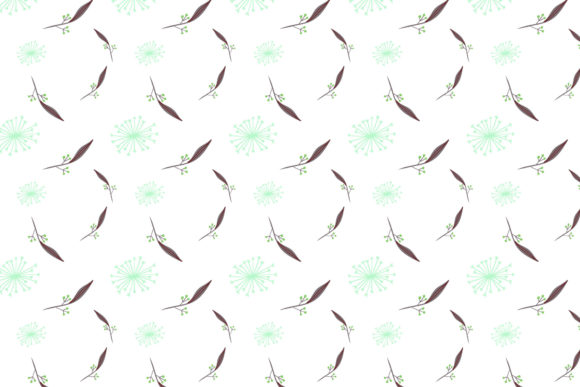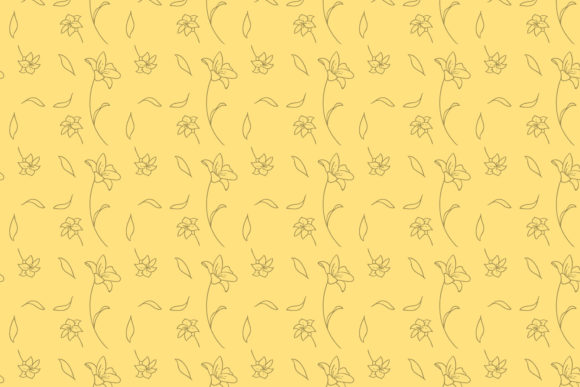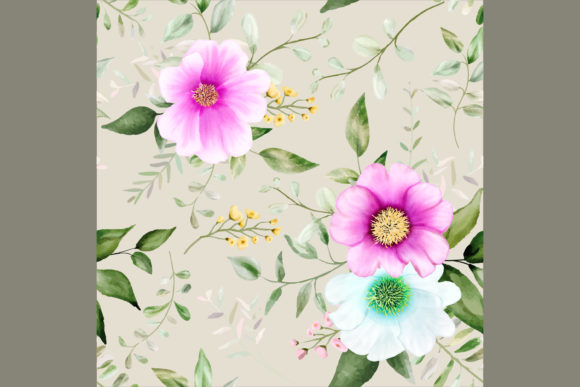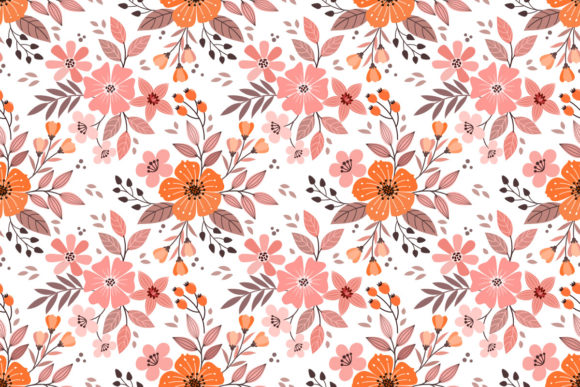
Pattern with Flower and Leaf: Timeless Design Language for Modern Digital and Print Use
Pattern with Flower and Leaf isn’t just decorative—it’s a visual language that bridges natural harmony and human intention. At its core, it’s a repeatable motif built from stylized botanical elements: blossoms, buds, stems, and foliage arranged with rhythm and balance. Unlike rigid geometric repeats or photorealistic illustrations, this pattern type carries organic warmth while maintaining structural clarity—making it uniquely adaptable across screens, surfaces, and scales.
Why This Pattern Resonates Now More Than Ever
Designers and brands are shifting away from sterile minimalism and algorithmically generated aesthetics toward work that feels intentional, human-scaled, and quietly meaningful. Pattern with Flower and Leaf fits seamlessly into that movement—not as nostalgia, but as a response to real shifts in attention, values, and interface expectations. People spend more time on digital platforms where visual fatigue is common; soft botanical rhythms offer subtle visual relief without sacrificing polish. In physical spaces—like retail signage, café menus, or workshop handouts—the same pattern adds warmth without clutter.
This isn’t about floral clichés. It’s about refined interpretation: a single leaf might be simplified to three fluid curves; a flower could be reduced to a central circle and four asymmetric petals. That level of thoughtful reduction supports legibility on mobile interfaces, scalability in app icons, and cohesion across multi-channel branding—whether a small business launching an online store or an educator designing printable classroom resources.
From Wallpaper to Workflow: Where It Fits Today
Pattern with Flower and Leaf thrives where flexibility matters. Consider how it functions across contexts:
- Web design: As subtle background textures behind call-to-action buttons or section dividers—adding depth without competing with content.
- Mobile apps: As loading screen motifs or category icons (e.g., a wellness app using leaf-dominant variations for “nutrition” and flower-dominant for “mindfulness”).
- Print collateral: On event posters where the pattern frames typography, or on packaging where it signals care and craftsmanship without overt branding.
- Educational tools: As gentle visual anchors in slide decks or worksheets—supporting focus for neurodiverse learners without distraction.
What makes this pattern especially practical is its technical readiness. High-resolution vector versions scale infinitely. SVG exports integrate cleanly into modern front-end workflows. PNG variants with transparent backgrounds drop effortlessly into Figma, Canva, or Adobe Express—no reworking needed. That interoperability lowers the barrier for freelancers managing tight deadlines and educators building resources between teaching hours.
How It Reflects Broader Creative and Cultural Shifts
There’s been a quiet but steady move toward what designers call “quiet luxury” in visuals—understated, tactile, and rooted in craft rather than flash. Pattern with Flower and Leaf aligns with that sensibility. It avoids trend-chasing by drawing from enduring visual principles: symmetry with variation, repetition with breathing room, detail with restraint.
This mirrors lifestyle changes too. Remote work has blurred boundaries between professional and personal environments. A website using this pattern might feel equally at home on a freelancer’s portfolio and a boutique studio’s homepage—because it conveys both competence and calm. Similarly, wellness brands, sustainable product lines, and local makers increasingly choose botanical motifs not for their literal associations, but for their implicit messaging: growth, continuity, care.
It’s also part of a larger pivot toward accessibility-aware design. When executed with clear contrast and consistent spacing, Pattern with Flower and Leaf can enhance spatial orientation—helping users parse sections on a landing page or distinguish tabs in an admin dashboard. It’s not a replacement for semantic HTML or proper ARIA labels, but a complementary layer that supports cognitive processing when used thoughtfully.
Practical Considerations for Real-World Use
Adopting Pattern with Flower and Leaf doesn’t require overhauling your entire visual system. Start small—and intentionally:
- Match tone to purpose: A tightly spaced, monochrome repeat suits a finance newsletter seeking trust and precision; a looser, watercolor-inspired version works better for a community garden initiative.
- Respect hierarchy: Use it as background texture—not foreground decoration—when text or data must remain primary. Test readability at 75% opacity before finalizing.
- Think in layers: Combine with solid color overlays or gradient masks to adapt the same base pattern for light/dark mode interfaces or seasonal campaigns.
- Consider motion sparingly: In web or app use, subtle parallax or slow scroll-triggered fade effects can add dimension—but only if performance stays unaffected and motion remains optional (via
prefers-reduced-motionsupport).
One common misstep is overloading multiple botanical patterns across one project—say, mixing vine scrolls, daisy repeats, and fern motifs. Consistency matters more than variety. Choose one interpretation of Pattern with Flower and Leaf and explore its range: adjust scale, rotate orientation, shift hue temperature, or isolate single elements as standalone icons. That discipline yields stronger recognition and cleaner implementation.
Looking Ahead: Sustainable Integration Over Trend Chasing
Unlike short-lived design fads—glowing glassmorphism, exaggerated gradients, or chaotic AI-generated textures—Pattern with Flower and Leaf gains strength through longevity. Its value lies not in novelty, but in reliability. As tools evolve (think CSS container queries, responsive SVG sprites, or design system tokens), this pattern adapts without friction. It’s already compatible with current best practices: lightweight assets, semantic structure, and inclusive contrast ratios.
For creators building long-term brands—or educators developing reusable curriculum materials—that durability is strategic. You’re not investing in a look that may feel dated in 18 months. You’re choosing a foundational element that supports evolution: swap out colors for seasonal updates, layer new typography over the same base, or animate individual components as interaction patterns mature.
Businesses adopting this pattern often report quieter wins—not viral metrics, but improved dwell time on resource pages, higher click-through on email headers using the motif, or more positive feedback on printed materials (“feels thoughtful,” “easy on the eyes”). These aren’t vanity metrics. They reflect real improvements in perception and usability.
Getting Started Without Overcomplication
You don’t need illustration skills or expensive software to begin. Many high-quality Pattern with Flower and Leaf assets are available as royalty-free vector downloads or design system components. When evaluating options, prioritize:
- File versatility: Does it include SVG, EPS, and PNG? Are paths clean and editable?
- Color flexibility: Is it built in layers or global swatches so you can recolor in seconds?
- Licensing clarity: Does usage cover commercial web, app, and print without additional fees?
- Scale integrity: Does it hold up when zoomed to 200% or shrunk to 16px height?
If you're creating custom versions, start with two elements—a simple bloom and a single leaf—and build outward. Limit your palette to three core colors plus neutrals. Test early on actual devices and paper stock—not just in mockups. And always ask: does this serve the user’s next action, or does it merely fill space?
Pattern with Flower and Leaf endures because it answers a quiet, persistent need: to make digital and physical experiences feel grounded, considered, and gently alive. It won’t solve every design challenge—but when applied with clarity and care, it consistently lifts the baseline of what feels usable, trustworthy, and human.